
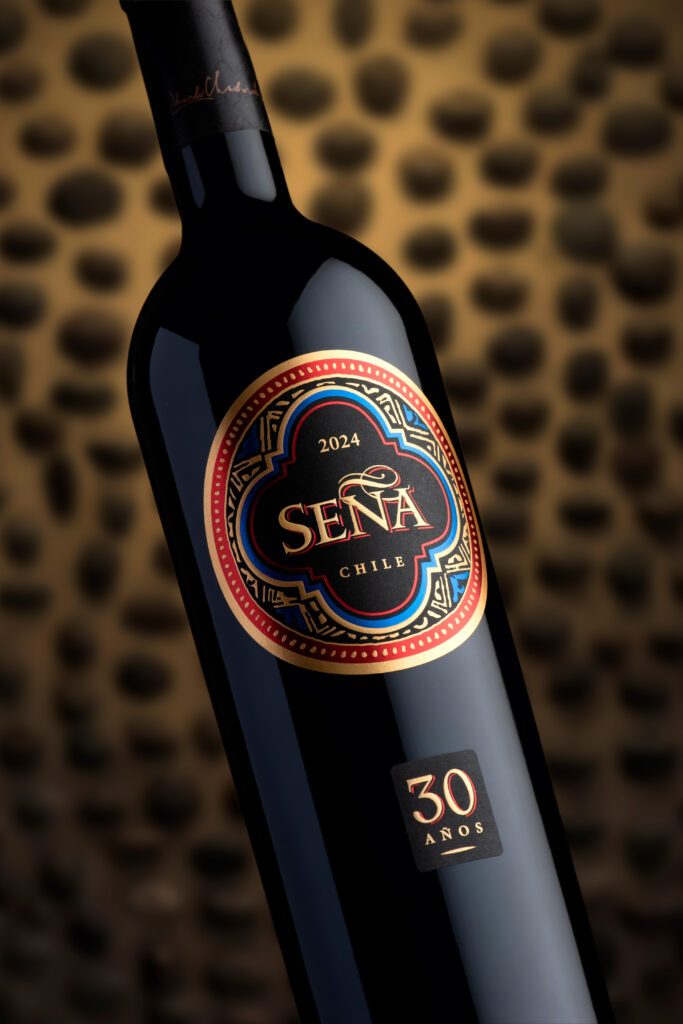
Sena: A Chilean Wine Icon
When it comes to Chilean fine wine, one name resonates more than any other: Seña. Since its launch in 1997 with the 1995 vintage, Seña – literally meaning “signal” – has become widely regarded as Chile’s First Growth. Leading critics such as Robert Parker, Tim Atkin and Jeff Leve have consistently awarded it scores into the high 90s and the 2015 and 2021 were given perfect 100-point scores by James Suckling. In our experience, including a fascinating tasting of historical vintages, it’s a wine of exceptional breed, balance and complexity that is fit to rank alongside Bordeaux’s First Growths. This bold statement is borne out by it beating them in a series of blind tastings in 2004. For all its acclaim and achievements, Seña remains a relative bargain. The 98-point Seña 2024 is £395 for a case of 6 bottles. A 98-point bottle of Mouton Rothschild 2022 will cost you around £720. Having tasted both, we know where we’d spend our money.
Seña: A Chilean Wine Superstar Going Supernova
Seña was born of conversations between Eduardo Chadwick of Errazuriz renown and the godfather of Californian wine, Robert Mondavi in 1991. Both men knew Chile had the potential to be a leading fine wine nation, the trick was to find the right location to plant a vineyard. Tim Mondavi and Eduardo Chadwick began searching for just the right terroir. It was Tim’s conviction that they needed a cooler site to make a fresher, more elegant wine, aspects that have become Seña’s hallmarks. They also wanted it to be made sustainably – a far-sighted viewpoint at the time – and so needed a site that would be relatively self-contained.
They chose a spot in the Aconcagua Valley that was sheltered by mountains and surrounded by forests. A 42-hectare hillside vineyard laying on volcanic and colluvial soils on the valley’s slopes includes a variety of textures and proportions of stone content, resulting in a great diversity of well-drained gravel and rocky soils with loam to clay-loam texture. It enjoys a Mediterranean climate of warm, dry summers, bright sunny days and cold, and rainy winters that the vines love. The proximity of the Pacific Ocean reduces the average temperature allowing for a long growing season that promotes complexity and finesse. The vineyard is farmed biodynamically and as the vines, a mixture of classic Bordeaux vines, Cabernet Sauvignon, Merlot, Malbec, Petit Verdot, Cabernet Franc and Chile’s signature grape, Carménère. As these age, the wines become ever more complex and age-worthy.
“Unremarked by some, Seña has totally changed style over the last decade and is now a more elegant, nuanced and complete wine.” Tim Atkin MW
The Seña Style
Like all true wine icons, Seña has its distinctive style. While Eduardo has long-held Chateau Margaux as his guided star, it was never his intention to create a Chilean facsimile of a great Bordeaux. While Seña is of First Growth quality, it’s Chilean to its roots. The decision to place Carménère at the heart of the blend (the 2024 Seña contains 16% Carménère, one of the highest proportions in its 30 year history) anchors it to Chile and adds a leafy, bell pepper and chocolate tone.
Like any great wine, Seña carries a taste of place. The free-draining soils, cool climate and long growing season all leave indelible birthmarks on it. There’s a freshness and elegance that pervades Seña. Despite it having an incredible weight of fruit, it never feels heavy or overblown. Structurally it’s well-proportioned with fine-grained tannins and firm acidity that enable it to develop over many years, but even in youth, it drinks well, the balance being sublime from the off. The 2024 Seña shows this characteristic perfectly. The ample black and red berry fruits coat the polished tannins so beautifully that it’s hard to resist its charms now, only the wonder of how much more it has to give stops you from opening a second bottle there and then.
Seña ages brilliantly. Tasting the 2012 and 2013 at the recent launch of the 2024, it was remarkable how fresh and vibrant they remained. Youthful fruit tones of blackcurrants and plums had been joined by secondary notes of black figs, woodsmoke and earth before the cleansing red fruit acidity swept in at the finish. In great years such as 2020, 2022 and 2024 it’s easy to see it having the potential for at least two decades of positive evolution in the cellar. Always assuming you can resist the temptation to drink it!


